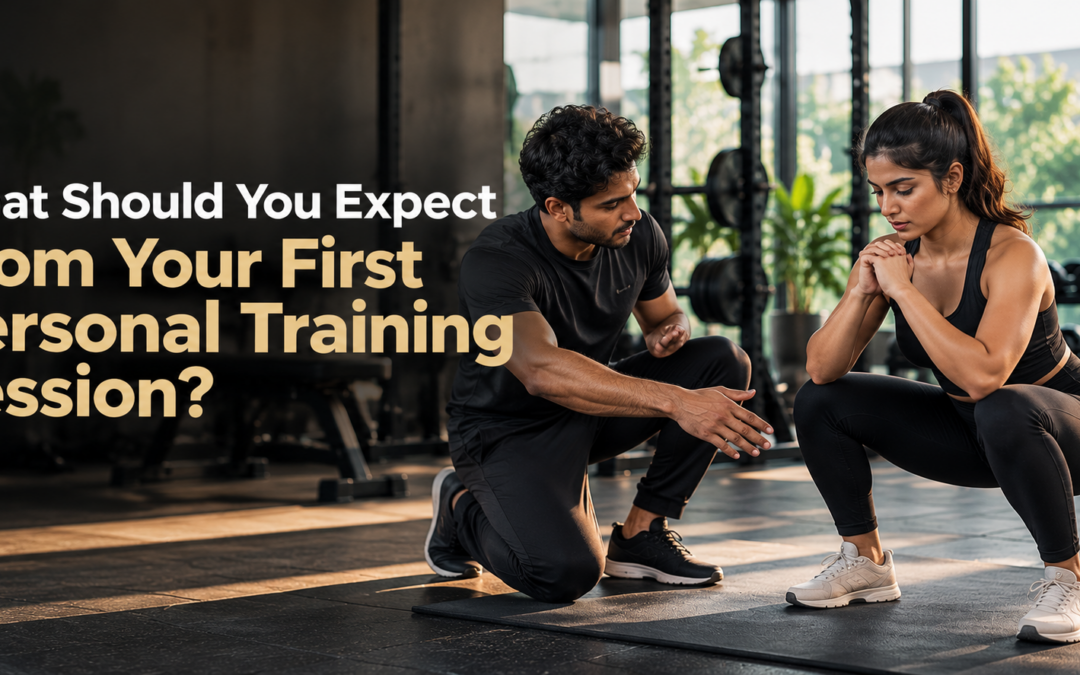
Starting personal training for the first time can feel a little unfamiliar. You may wonder what the trainer will ask, whether you need to prepare anything, or how the first workout will actually be structured.
The first session is usually about much more than simply completing a difficult workout.
A good initial session gives the trainer an opportunity to understand your goals, experience, movement abilities, and training preferences. It also gives you a chance to understand how the trainer works.
If you’re considering Personal Training in Gym in Brigade Road, knowing what to expect can make your first session feel much more comfortable.
The Session Usually Starts With a Conversation
Before jumping into exercises, your trainer may want to understand why you decided to start personal training.
You may discuss:
- Your fitness goals
- Previous exercise experience
- Current activity levels
- Training preferences
- Daily routine
- Available training time
- Any relevant limitations or concerns
This conversation helps provide context for everything that follows.
A trainer can’t create an appropriate program without understanding the person who will be following it.
Your Goals Help Shape the Program
Not everyone enters a gym with the same objective.
You may want to improve general fitness, build strength, become more active, improve endurance, or work toward changes in body composition.
Your trainer should understand what success means to you.
Clear goals also make it easier to decide what types of training should receive more attention.
You May Go Through a Basic Fitness Assessment
Depending on the trainer and your goals, the first session may include some form of assessment.
This doesn’t necessarily mean a complicated test.
The trainer may observe basic movements, mobility, coordination, balance, or your ability to perform certain exercises.
The purpose is to understand your current starting point.
This gives the trainer useful information for designing a program that matches your present ability rather than assuming you’re at a particular fitness level.
Don’t Worry About Being Perfect
Your first session is not an examination.
You aren’t expected to already know how to use every machine or perform every exercise correctly.
That’s one of the reasons you’re working with a trainer.
If you’re unfamiliar with a movement, the trainer can explain it and demonstrate the correct technique.
Asking questions is also part of the process.
You May Learn Basic Exercises
The first session may introduce you to some of the movements that will form part of your future workouts.
Depending on your goals, these could include exercises involving:
- Squatting
- Pushing
- Pulling
- Hinging
- Carrying
- Core stability
- Cardiovascular conditioning
The exact exercises will depend on your experience and objectives.
The focus should be on learning how to perform movements properly rather than trying to do everything in one session.
Your Trainer Will Observe Your Technique
Technique is an important part of personal training.
Your trainer may pay attention to how you position your body, control movements, maintain balance, and respond to different exercises.
This information helps them decide which movements are appropriate and whether certain exercises need to be modified.
Learning good movement habits early can make future training more effective.
The First Workout Doesn’t Need to Destroy You
A common misconception is that a personal training session is successful only if you’re completely exhausted afterward.
That’s not necessarily the case.
The first session is also about learning.
Your trainer needs to understand how your body responds to different movements and levels of effort.
Pushing too hard before understanding your current fitness level may not be useful.
A well-structured session should challenge you appropriately while giving the trainer valuable information about how you respond to training.
You Can Discuss Your Weekly Schedule
Personal training works best when it fits into your actual lifestyle.
During your initial conversation, explain how often you can realistically train and which days or times are convenient.
If you work long hours or have an unpredictable schedule, mention that.
This allows the trainer to build a routine that you have a realistic chance of maintaining.
Your Trainer May Explain the Training Plan
Once the trainer understands your goals and starting point, they can begin explaining how your training may be structured.
You might discuss:
- Training frequency
- Types of workouts
- Exercise progression
- Independent workouts
- Recovery
- Progress tracking
You don’t necessarily need a complete long-term plan during the first hour, but you should have a general understanding of where your training is going.
Communication Matters
Your first session is also an opportunity to see how comfortable you are communicating with the trainer.
Can you ask questions?
Does the trainer explain exercises clearly?
Do they listen to your concerns?
Do they adjust their explanations when something isn’t clear?
These things matter because personal training involves an ongoing relationship between the client and trainer.
You Should Be Able to Give Feedback
Tell your trainer how an exercise feels.
If something feels too difficult, uncomfortable, or confusing, communicate that.
Good coaching isn’t about forcing every person through exactly the same workout.
Your feedback provides useful information that can help the trainer adjust exercises and training intensity appropriately.
What Should You Wear?
You don’t need complicated equipment for your first personal training session.
Wear comfortable clothing that allows you to move freely and choose suitable training shoes.
Bring water and arrive with enough time to settle in rather than rushing directly into the session.
The focus should be on being comfortable and ready to move.
What Happens After the First Session?
The first session provides a starting point.
As you continue training, your trainer can use what they learned to refine your program.
Your workouts may gradually become more structured as your technique, strength, endurance, and confidence improve.
Progress should be monitored over time rather than judged by a single workout.
Why the First Session Matters
A good first session establishes the foundation for everything that follows.
It helps the trainer understand where you are starting and gives you a clearer idea of what your training journey may look like.
It also allows both sides to establish expectations around communication, scheduling, goals, and training style.
For someone considering Personal Training in Gym in Brigade Road, this initial experience can be useful in deciding whether the training approach suits you.
Final Thoughts
Your first personal training session doesn’t need to be intimidating.
Expect a combination of conversation, assessment, movement practice, and introductory training rather than simply an intense workout.
Come prepared to explain your goals, ask questions, and give honest feedback.
The more your trainer understands about your starting point and objectives, the easier it becomes to build a training program that is appropriate for you.
If you’re exploring Personal Training in Gym in Brigade Road, use your first session as an opportunity not only to train, but also to understand the coaching approach and how it can fit into your long-term fitness routine.