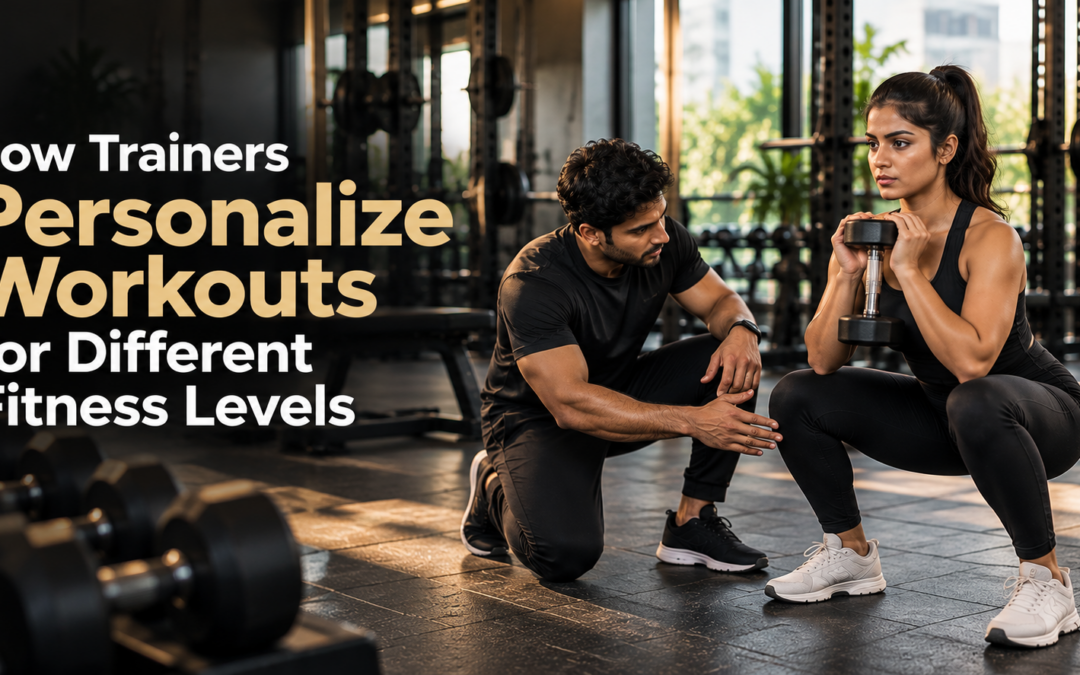
Walk into any gym and you’ll find people at completely different stages of their fitness journey.
One person may be learning how to perform basic exercises, while another may have years of strength training experience. Some may be returning to exercise after a long break, while others may already have a structured routine.
Giving everyone the exact same workout wouldn’t make much sense.
This is where personalized training becomes useful. A good trainer can adjust exercises, training intensity, volume, and progression according to where each person currently is.
For people considering Personal Training in Gym in Brigade Road, understanding how this personalization works can help explain why individual coaching is different from following a generic workout plan.
Fitness Level Is More Than How Much Weight You Can Lift
Your fitness level isn’t determined by one number.
A trainer may consider several factors, including:
- Training experience
- Strength
- Cardiovascular fitness
- Mobility
- Exercise technique
- Coordination
- Recovery ability
- Current activity levels
Two people who can lift the same amount of weight may still require completely different training approaches.
That’s why personalization begins with understanding the individual rather than simply choosing a workout from a template.
Beginners Need a Strong Foundation
Someone who is completely new to training may not need highly advanced exercises.
The priority is usually learning fundamental movements and becoming comfortable with the training environment.
A trainer may introduce basic exercises and focus on:
- Correct technique
- Equipment setup
- Movement control
- Appropriate resistance
- Breathing
- Workout structure
The aim is to build confidence and establish good movement habits before adding unnecessary complexity.
Intermediate Members Need New Challenges
Once someone has developed basic training experience, their program can become more demanding.
They may already understand common exercises but need additional challenges to continue progressing.
A trainer might adjust:
- Resistance
- Repetitions
- Sets
- Exercise variations
- Training volume
- Rest periods
The changes don’t have to be dramatic. Small, well-planned adjustments can make a familiar workout more challenging.
Experienced Members May Need More Precision
Advanced gym-goers often don’t need someone to explain every basic exercise.
Instead, they may benefit from more specific coaching.
A trainer can focus on areas such as:
- Technique refinement
- Performance
- Training weaknesses
- Exercise selection
- Progressive overload
- Workout structure
At this stage, personalization can involve making small changes that have a specific purpose rather than constantly introducing new exercises.
The Same Exercise Can Be Modified
Personalization doesn’t always mean giving different people completely different workouts.
The same movement can often be adjusted according to ability.
For example, an exercise can be modified by changing the resistance, range of motion, tempo, repetitions, or level of assistance.
This allows people with different abilities to work on similar movement patterns while training at an appropriate level.
Trainers Adjust Intensity
Intensity is another important part of personalization.
A beginner may need a lower training intensity while learning proper technique.
As their fitness improves, the trainer can gradually increase the challenge.
This approach allows the individual to adapt instead of being pushed immediately into a workload that may be inappropriate for their current ability.
Volume Can Be Different for Everyone
The amount of training you can handle depends on several factors.
A person who has trained consistently for years may tolerate a greater training volume than someone who is just starting.
A trainer can adjust the number of sets, repetitions, exercises, and sessions based on how the individual responds.
More training isn’t automatically better.
The goal is to find an appropriate amount that supports progress while allowing sufficient recovery.
Recovery Is Part of Personalization
A workout program doesn’t exist separately from the rest of your life.
Work, sleep, daily activity, stress, and other responsibilities can influence recovery.
A good trainer considers these factors when planning training.
If someone is consistently struggling to recover, the answer may not be adding more exercise. The program may need changes to its volume, intensity, or schedule.
Goals Also Change the Workout
Fitness level is only one part of personalization.
Your goal matters too.
Someone focused on improving general fitness may need a different program from someone primarily interested in strength development.
Likewise, someone working on endurance may require a different balance of training from someone focusing on mobility or body composition.
The same person may also have different goals at different stages of their fitness journey.
Trainers Can Identify Areas That Need Attention
Sometimes progress is limited not because you’re lacking effort, but because a particular part of your training needs attention.
A trainer observing your movements may identify areas such as:
- Poor exercise technique
- Limited mobility
- Weakness in a particular movement
- Inconsistent training
- Poor exercise selection
Addressing these issues can make your overall training more effective.
Progression Should Be Gradual
Personalized training isn’t about making every workout harder.
Progression should happen at a pace that matches the individual.
A trainer may gradually increase resistance, introduce a more challenging variation, increase volume, or make another appropriate adjustment.
The objective is to create continued development without making progress unnecessarily difficult.
Personalization Can Also Mean Simplifying Things
Sometimes the best adjustment is making a workout simpler.
If an exercise is too technically demanding or doesn’t suit someone’s current ability, a trainer can choose an alternative movement that trains a similar pattern.
This isn’t reducing the value of the workout.
It’s making the exercise more appropriate for the person performing it.
Why Generic Programs Don’t Always Work
Online workout plans can be useful for providing ideas, but they don’t know anything about the person following them.
A generic program doesn’t automatically know your training history, movement ability, schedule, recovery, or specific goals.
Personal training adds human observation and ongoing adjustment to the process.
The program can respond to your actual performance instead of assuming that everyone will respond in the same way.
Personal Training Can Evolve With You
One of the biggest advantages of personalized training is that your program doesn’t have to remain fixed.
As your fitness improves, your needs change.
An exercise that was difficult several months ago may become comfortable. A goal that once seemed distant may become achievable. You may also discover new areas of fitness that you want to explore.
Your training can evolve accordingly.
What to Discuss With Your Trainer
The more information your trainer has, the easier it is to personalize your program.
Be open about:
- Your goals
- Your previous training experience
- Your weekly schedule
- Exercises you enjoy
- Exercises you find difficult
- Your recovery
- Any relevant physical limitations
Good communication allows your trainer to make better decisions about your training.
Final Thoughts
Personalized training isn’t simply about giving every member a different list of exercises.
It involves understanding the individual’s fitness level, goals, movement ability, schedule, recovery, and progress, then adjusting the training accordingly.
Beginners may need more emphasis on fundamentals, intermediate members may need progressive challenges, and experienced gym-goers may benefit from more precise coaching.
If you’re considering Personal Training in Gym in Brigade Road, look for a training approach that can adapt as you improve.
A good workout plan shouldn’t only match where you are today. It should have the flexibility to develop as you become stronger, more experienced, and more confident.