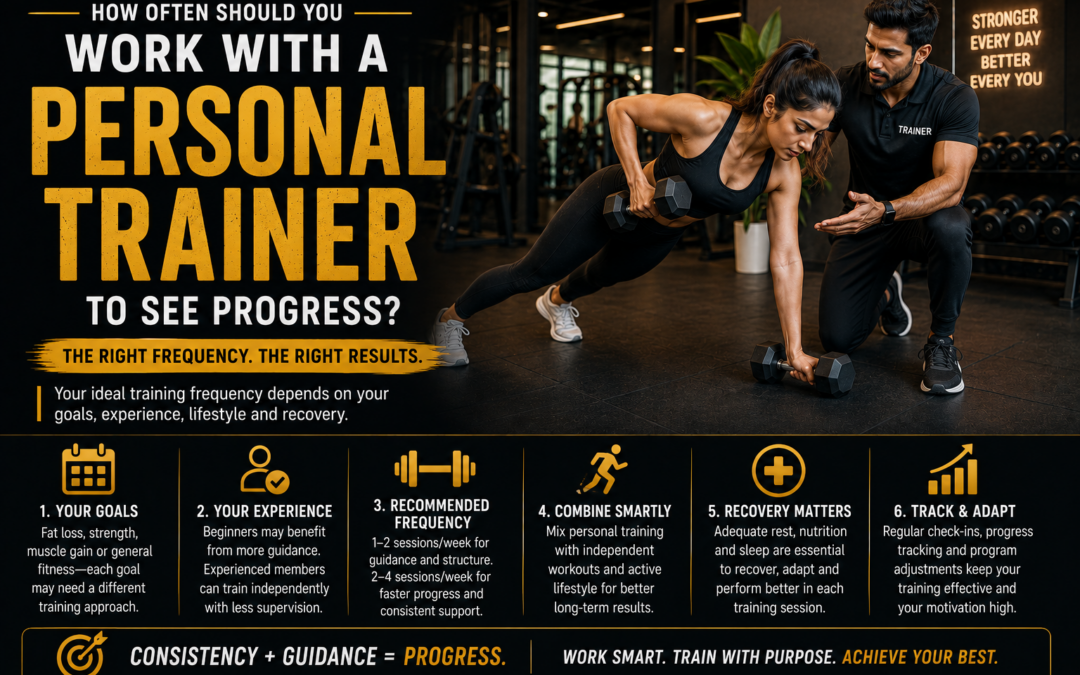
When people consider personal training, one of the first questions they often have is how frequently they need to meet their trainer.
Should you train with a coach every day? Is once a week enough? Can you combine personal training with independent workouts?
There isn’t one frequency that works for everyone. The right schedule depends on your fitness goals, training experience, availability, recovery, and how much guidance you need.
If you’re considering Personal Training in Indiranagar, understanding these factors can help you choose a training schedule that is realistic and sustainable.
There Is No Universal Training Frequency
Fitness programs should be built around the individual.
A beginner learning the fundamentals may benefit from more frequent coaching initially, while someone with significant training experience may need fewer supervised sessions.
Your goal also matters.
Someone focused on general fitness may have different training requirements from someone working toward strength development, body-composition changes, or a specific performance objective.
Rather than choosing a number of sessions simply because it is popular, consider what your own routine requires.
Once a Week Can Still Be Valuable
You don’t necessarily need a personal trainer every day to benefit from professional coaching.
For some people, one supervised session each week can provide structure while allowing them to complete additional workouts independently.
A weekly session can be used to:
- Review technique
- Check progress
- Adjust the workout plan
- Learn new exercises
- Address weaknesses
- Set goals for the coming week
This can work particularly well for experienced members who are comfortable training independently between sessions.
Two or Three Sessions Can Provide More Structure
For people who want more hands-on guidance, training with a coach multiple times a week can provide greater structure.
This approach may be useful when you’re:
- New to structured exercise
- Working toward a specific goal
- Learning unfamiliar movements
- Struggling with consistency
- Looking for regular accountability
More frequent sessions also give your trainer more opportunities to observe your technique and make adjustments based on your progress.
Beginners May Need More Guidance
Starting a new fitness routine involves learning a lot at once.
You may need to understand how to use equipment, perform exercises correctly, select appropriate resistance, and organize your workouts.
More frequent coaching can help you learn these fundamentals sooner.
However, the goal should not be to remain dependent on your trainer forever. Good coaching should gradually help you become more confident and capable on your own.
Your Experience Changes the Equation
An experienced gym member may already understand exercise technique and basic programming.
In this situation, personal training can take a different form.
Instead of teaching every movement from the beginning, the trainer may focus on improving technique, introducing new strategies, reviewing progress, and helping you overcome plateaus.
This means an experienced person may require a different training frequency from someone who is completely new to fitness.
Your Goals Should Determine the Schedule
Consider what you want your training to accomplish.
General Fitness
If your goal is simply to remain active and improve overall fitness, fewer supervised sessions may be enough when combined with independent exercise.
Strength Development
Strength-focused goals often benefit from consistent training and progressive programming. A trainer can help you manage exercise selection, technique, resistance, and progression.
Body Composition
If you’re working toward changes in body composition, training frequency should fit into a broader approach that also considers nutrition, recovery, and daily activity.
Building Exercise Confidence
If your biggest challenge is simply feeling comfortable in the gym, more frequent coaching at the beginning may help you learn faster and build confidence.
Don’t Forget Independent Workouts
Personal training doesn’t have to mean that every workout takes place with your trainer.
A well-designed program can combine supervised and independent sessions.
For example, your trainer may teach you specific exercises during your sessions and give you a structured routine to follow independently on other days.
This approach can give you both professional guidance and the flexibility to manage your own schedule.
Recovery Matters
Training more frequently isn’t automatically better.
Your body needs adequate recovery between demanding sessions.
Recovery requirements can vary based on:
- Training intensity
- Exercise selection
- Fitness level
- Sleep
- Daily activity
- Overall lifestyle
A good trainer should consider these factors when determining how often you train.
The objective is to create enough training stimulus to progress while allowing your body to recover appropriately.
Your Schedule Has to Be Realistic
The best training plan is one you can consistently follow.
If your work schedule makes four supervised sessions difficult, committing to four sessions may create unnecessary pressure.
Instead, find a frequency that fits your actual lifestyle.
For busy professionals considering Personal Training in Indiranagar, this flexibility can be particularly important.
A sustainable routine is more valuable than an ambitious schedule that becomes difficult to maintain after a few weeks.
How Do You Know If Your Frequency Is Working?
Your training schedule should be evaluated based on your progress and how you feel.
Useful indicators include:
- Improved exercise technique
- Increasing strength
- Better endurance
- Greater consistency
- Improved workout confidence
- Progress toward your specific goals
If you’re consistently exhausted, struggling to recover, or unable to maintain your schedule, your training approach may need adjustment.
Likewise, if progress has stalled despite consistent training, your program may need to change.
Your Trainer Should Reassess Your Program
Training frequency doesn’t have to remain the same throughout your fitness journey.
You may begin with more frequent sessions while learning the basics and gradually move toward more independent training.
Alternatively, you might increase coaching during a period when you’re working toward a specific goal.
Regular reassessment allows your training schedule to evolve as your needs change.
Quality Matters More Than Simply Counting Sessions
Five poorly structured workouts aren’t necessarily better than three well-planned ones.
The effectiveness of personal training depends on what happens during those sessions.
A good program should have:
- Clear objectives
- Appropriate exercise selection
- Proper technique
- Progressive overload where suitable
- Adequate recovery
- Regular progress reviews
The focus should always be on meaningful training rather than simply accumulating sessions.
What Should You Discuss With Your Trainer?
Before deciding on your training frequency, talk openly with your trainer.
Discuss your:
- Fitness goals
- Weekly availability
- Previous training experience
- Current activity level
- Recovery
- Preferred workout schedule
A qualified trainer can then help determine a practical approach based on your individual circumstances.
Final Thoughts
There is no single answer to how often you should work with a personal trainer.
Some people may benefit from weekly coaching combined with independent workouts, while others may prefer multiple supervised sessions each week. Beginners may initially require more guidance, while experienced members may use personal training primarily for progression, technique, and accountability.
The most effective schedule is one that matches your goals, lifestyle, experience, and ability to recover.
If you’re exploring Personal Training in Indiranagar, speak with a trainer about what you want to achieve and how much time you can realistically dedicate to training.
With the right structure, personal training can become more than scheduled gym sessions—it can provide a framework that helps you train consistently, understand your progress, and gradually become more confident in managing your own fitness journey.